Dear Colleagues,
Welcome back. I hope half term treated you well. This first week back has been a full one, and there are a few things I want to share that have been occupying my thinking.
Otterham
I spent time at Otterham Community Primary School on Thursday, and it left a real impression. The visit was one of our regular review and support sessions, but it became something richer than that. Sitting with the head teacher, Mrs Ward, and colleagues from the trust, what came through most clearly was the sheer determination to remove obstacles for the children there, not just in terms of SATs preparation, but in building the kind of knowledge and confidence that will serve them well when they move to secondary school.
Mrs Ward, who has worked at Otterham for many years and knows it inside out, challenged me to find something she didn't already know about her school. So I put the question to a group of Year 5 and 6 pupils: what does Mrs Ward not know? The answer, it turned out, was very little. What did emerge was a school-wide investigation into a small piece of graffiti on the school train, a piece of equipment the children helped raise money for. What struck me was the way it had been handled. Rather than a heavy-handed response, the school had turned it into something of a communal mystery. The children were genuinely invested in solving it, and you could tell that whoever was responsible would be brought back into the fold with care rather than simply punished. That tells you a lot about a school's culture.
I also watched their signing choir rehearse for an upcoming March performance. It was genuinely moving, and deeply inclusive, which matches the ethos of the whole school. Otterham sits in the middle of a field in North Cornwall, a small place, but one where high standards and compassion sit together very naturally. It reminded me why we work so hard to make sure our smaller primaries are nurtured and supported within the wider trust structure.
WeST 2030: Every Child Achieving
On Monday, we will publish the final version of our five-year strategic plan, WeST 2030: Every Child Achieving. I want to give you a brief sense of what it contains, because it has been shaped by many conversations across the trust and I think it reflects something genuinely ambitious.
Our mission remains: empowering all children and young people to impact positively on society. Our vision: every child achieving in a great school. We have added respect as an explicit value, alongside collaboration, aspiration, integrity and compassion. It was always present within integrity, but we felt it deserved its own space. Respect in its most literal sense: showing due consideration for the thoughts, feelings and beliefs of others, and understanding that difference is something to value.
The plan is built around four pillars. The first and third will be familiar. Educational excellence and achievement remains central, because we are schools, and we need young people to excel in whatever they choose to do, whether that is academic outcomes, sport, creative work, or leadership. People, talent and workload is the third pillar, and it reflects our commitment to attracting and investing in the people who serve children. My core belief, which underpins everything here, is that every part of this organisation should be working to make sure teachers can be excellent where it matters most: with the young people in front of them. I see my own role as a servant of that endeavour.
The two newer pillars are character, culture and opportunity, and community connection and place. On character, we think about it in three dimensions: caught, sought and taught. Caught is when we notice young people demonstrating resilience, respect or determination of their own accord. Sought is where we deliberately create opportunities for leadership and enrichment. Taught is embedding character education explicitly in what we do. To that end, I am pleased to share that we are signing all 31 of our schools up to the Association for Character Education, with every school working towards the ACE Kite Mark over time. Some already hold it. For others, it will be a longer process. But it is not a badge for the wall. The Kite Mark requires schools to demonstrate that values are genuinely intrinsic to everything they do, and that young people can reflect and articulate them. It is rigorously tested.
Community connection and place is about something I feel strongly we need to recover. There was real energy in the 1990s around community schools being the hub of their neighbourhoods, connected to families, health services and the wider public. Some of that has eroded. When I look at the rising number of complaints schools are fielding, at attendance challenges, at what sometimes feels like a fracturing of the school-home partnership, I think part of the answer lies in re-establishing that connection. We want our schools to be anchor institutions, places where expertise and care extend beyond the school gates and into families and communities. It is an ambitious agenda, and I will return to it in future editions.
Funding and Financial Stewardship
We have now completed our round of ICFP financial benchmarking meetings for this cycle. The funding picture for next year is not easy, and that is widely known. But we pride ourselves at WeST on careful financial stewardship, and we will navigate what is ahead. For our smaller primaries especially, being part of a larger trust provides a layer of insulation against those headwinds that would be very difficult to achieve alone.
Director of Education (Primary)
We are currently recruiting for a Director of Education for Primary, to oversee our 23 primary schools from September. The role has generated strong interest, and the conversations I have had with candidates have reminded me of something distinctive about WeST: the breadth of our provision. We run from nursery through primary, secondary, post-16, and into aspects of adult education. Our training arm within our own staff is vibrant. That span is a real strength, but it also carries a profound responsibility, particularly around transition. A significant number of our primary children move into our secondary schools, and some will stay with WeST from nursery right through to 18. If that is not a responsibility worth taking seriously, I do not know what is.
Tech Sprint
Our Tech Sprint programme continues at pace. We are meeting daily at the moment across two strands. The first is the upgrade of our Microsoft environment so that all schools and central services sit within a single, coherent platform. When complete, this will make online collaboration significantly easier, dovetailing with the physical visits, meetings and events that remain so important. The second strand is exploring how we can use the agility of current technology to build capacity. It is not glamorous work, but it is foundational.
Arena
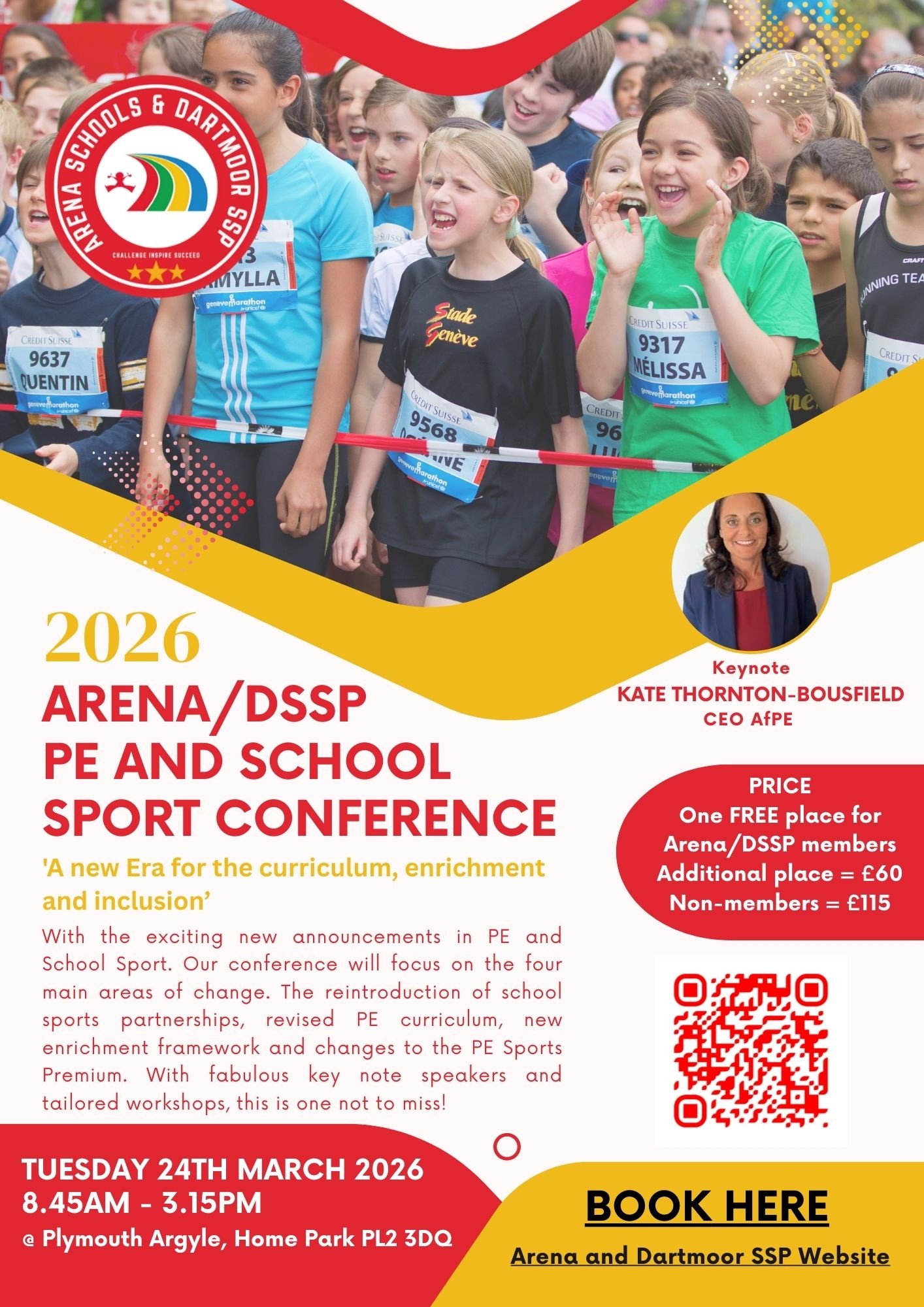
I spent time this week with Michelle Roberts, who leads our Arena programme. Arena provides sports coaching and PE provision across our primary schools and beyond, operating out of Callington and South Dartmoor. At any given point, up to 20 adults can be working through that programme with children. It gives primary teachers valuable planning and preparation time, but it does much more than that: it builds sporting confidence, leadership skills and healthy habits. Michelle and her team, including Alex, Beth, Dan, Becky, Tammy and many others, do a remarkable job. Arena is also a genuine expression of our civic commitment, reaching schools beyond our own network and sharing what we have with the wider community.
Around the Trust
There has been plenty to notice across schools this week as everyone has returned.
Plymstock School launched their Year 11 countdown assembly series, Locked In: The Final 8, marking the eight weeks until GCSEs begin. There is something powerful about naming that period and helping students feel the urgency without the panic. Plymstock also celebrated the achievements of Megan in Year 9 and her sister Beth in Year 10, who between them have competed in 16 swimming races across an extraordinary range of distances and strokes. That level of commitment at their age is something to admire. And their Geography students have been exploring the layers of the Earth by making chocolate brownie cross-sections, which is the kind of creative teaching that stays with you.
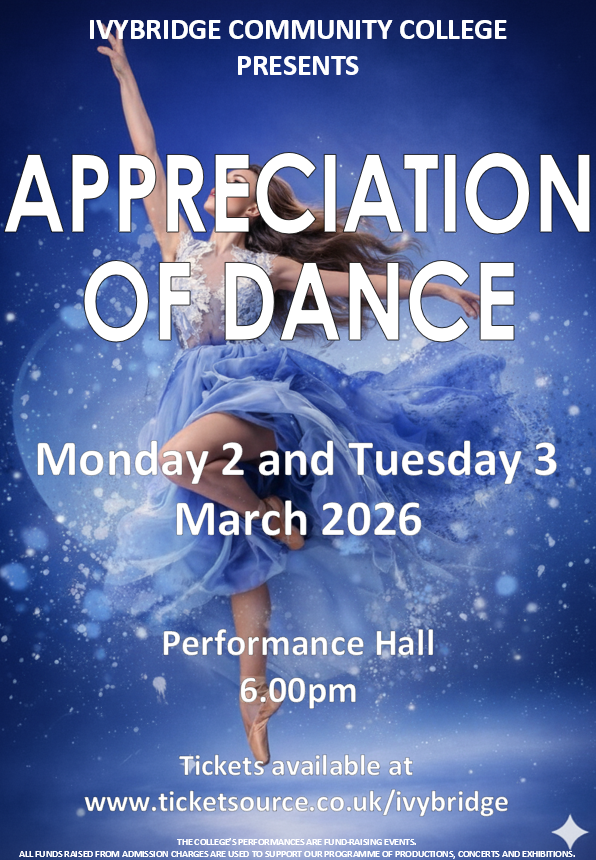
At Ivybridge Community College, 160 students worked with Box House Theatre Company, creating physical theatre performances inside a 2.5 metre box. The Drama department deserves real credit for making that happen. Ivybridge also shared news that two former students, Izzy Firth and Alice Fleming, have been selected for the England U18s camp. That is a phenomenal achievement and a credit to the foundations laid during their time at the college.
World Book Day preparations are gathering momentum across several schools. Ivybridge has chosen an Alice in Wonderland theme and is collecting teapots and teacups to bring it to life, while Sir James Smith's and Woodford Primary are both running their own events and competitions. These celebrations of reading matter enormously.
At Coombe Dean School, eleven Year 12 students are now paired with Year 7 pupils for regular reading sessions each Monday and Friday as part of the sixth form volunteering programme. That kind of cross-phase mentoring builds something valuable on both sides.
In our primaries, Chaddlewood's Year 1 had enormous fun following non-fiction instructions to make edible slime from Haribo bears, a genuinely clever way to teach procedural writing. Plympton St Maurice celebrated Chinese New Year with a whole-school orienteering day that brought together map-reading, problem-solving and teamwork. Boringdon is welcoming families to open events for their preschool provision. And St Breward's netball team represented their school with real determination and sportsmanship at an inter-school tournament.
Sir James Smith's hosted a lovely community initiative, with Cornwall Hospice running a Prom Pop Up Shop during the Year 11 parents' evening, offering preloved prom dresses, shoes and accessories for no more than £20. That kind of partnership is exactly what community connection looks like in practice. They are also recognising students weekly for completing their SPARX maths homework, with voucher prizes drawn from those who finish each week.
Plymstock is advertising an Iceland geography trip for 2027, and has announced open mornings in June for Year 4 and 5 families. Ashburton Primary is recruiting a new caretaker. These operational details might seem small, but they are signs of schools planning ahead and looking outward.
Looking Ahead
Next week I will be paying close attention to how the strategic plan lands once it is published on Monday. After months of drafting, consultation and refinement, it will be good to have it in people's hands. I am curious about which parts resonate most, and where the questions and challenges will come from. A plan only means something if it changes what we do, and I will be listening carefully for how colleagues across the trust respond.
Thank you, as always, for everything you bring to our schools.
Warm regards,
Nat Parnell
CEO