Dear Colleagues,
Spending time in and around our schools this week has left me feeling proud of the people I work alongside and the shared sense of purpose that runs through WeST. Everywhere I look I see colleagues leaning into our values, pushing boundaries and quietly getting on with the hard work of making things better for children. From strengthening specialist partnerships, to improving governance, to exploring how technology might genuinely help us, it feels like a Trust that is curious, ambitious and never standing still.
Strengthening collaboration with Special Schools and specialist trusts
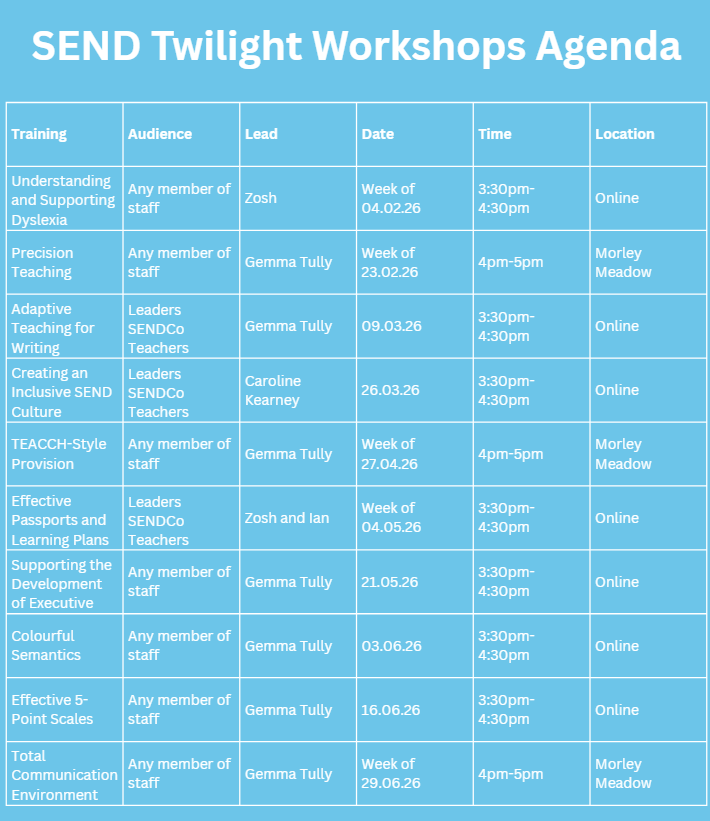
One of the most important developments underway is our growing partnership work with Special Schools and the trusts who lead them. Several of you have been involved in early discussions, and I continue to be encouraged by the willingness of colleagues to engage so openly and constructively. These relationships are already helping us to think differently about how we support children with complex needs and how we build the right expertise around them.
As these partnerships strengthen, I am increasingly confident that they will play a central role in ensuring our SEND provision across the Trust is not only consistent but genuinely sector-leading.
West Community Councils shaping local governance
Our West Community Councils continue to take shape with a growing sense of purpose, and the recent meeting of the WCC Chairs has reinforced just how transformative this approach to local governance can be. That session demonstrated the clarity of our ambition and the shared commitment to placing lived experience and community voice at the centre of school oversight. This is not governance at a distance. It is trustees deliberately handing key aspects of local oversight back to those closest to the day-to-day realities of our schools.
A timely example comes from Sir James Smith's Community School, where nominations for a parent member are now open, giving families a direct role in shaping school decision-making and ensuring their voices influence the direction of the community they belong to. It is moments like these that illustrate why the WCC model matters and why I feel such excitement about what it will unlock for our Trust in the years ahead.
Celebrating the week across WeST
The past seven days have been full of achievements, creativity and community spirit across our schools.
Across our primaries this week, there has been a real sense of warmth, creativity and community action. Boringdon Primary School marked a special milestone as the journey now begins at age three, with families invited to tour the fantastic new teacher-led preschool. The excitement in the posts reflects a school that continues to grow its early-years offer with confidence and care, creating a nurturing start for the very youngest in our Trust.
It has also been lovely to see Morley Meadow Primary School championing community generosity through their Bag2School clothing collection. Their call for unwanted items is a reminder of how small actions from families provide vital funds that help sustain enrichment, from subsidised coaches for swimming to essential Wild Tribe equipment. This kind of community-powered contribution is exactly what keeps primary provision vibrant and inclusive.
At Oreston Community Academy, weekly celebration remains at the heart of school life, with certificate winners proudly recognised for their effort, progress and character. These moments of affirmation not only build confidence in pupils but also help nurture the strong culture of belonging and aspiration that defines the school. It is always uplifting to see such joy shared so publicly.
And from Camelford Primary School, the cheerful simplicity of their updates, a bright “Today!” alongside snapshots of school life, captures the spirit of a community grounded in togetherness. Even the smallest glimpses show a school where routines, relationships and daily experiences are valued, and where children are clearly at the centre of everything.
At Coombe Dean School, huge congratulations go to Jamie, crowned Devon U16 Table Tennis Champion after years of dedication. He now heads to Wolverhampton as the school’s first ever National Final competitor, a milestone that reflects the determination and aspiration we see across our Trust.
Our schools continue to celebrate the wonderful things happening day to day. From community fundraising at Morley Meadow to the vibrant certificate celebrations at Oreston, each example highlights the care, opportunity and inclusivity we strive to model.
Ivybridge Community College has also been particularly busy, with national creative arts recognition, Cambridge offers for four students, and impressive sporting success, alongside another week of adventure-filled Wild Tribe activities that show just how powerfully outdoor learning can shape confidence and character.
At Plymstock School, careers, creativity, sport and health education have all been centre stage, including their Health Promotion event and extensive engagement with apprenticeship opportunities, each widening horizons for their learners.
Meanwhile, at South Dartmoor, clear communication around transport disruption has once again demonstrated leadership grounded in calm, practical care for families.
And across many of our secondaries, from Eggbuckland’s celebration of students of the week to the ongoing sporting successes at Plymstock and the creative projects taking shape, there is a real sense of pace, pride and positive identity.
Technology, AI and organisational readiness
Alongside the day-to-day life of our schools, much of my own recent work has centred on our digital future. Conversations with trustees and our IT strategic and technical leadership in recent days have deepened my sense of both excitement and trepidation.
What is becoming clear is that the pace of AI development is unlike anything we have seen before. In our discussions, I’ve spoken openly about how rapidly the landscape is shifting: technologies that felt five years away are already demonstrable today. I’ve also shared how my own workflows now routinely involve AI as a companion, helping me think, draft, organise and test ideas, but always with a human in the loop shaping, challenging and finalising the work. This, for me, is the critical point: AI can assist, but responsibility, judgement and authorship must remain human. It is an indication of what will soon be normal across the sector.
These are not abstract possibilities. They are immediate opportunities that will reshape teaching, leadership and operational work. But they also expose critical dependencies. Our move to a single Microsoft tenancy, for example, is more than an IT exercise. It is foundational if we are to build secure innovation pipelines and future-proof the organisation. Several of our recent discussions have underlined the urgency around this, and the risks of treating a two-year timeline as sufficient when, in AI terms, that is closer to twenty.
Working with key administration colleagues to produce proof-of-concept work, we have also been exploring what an organisational rhythm of 30-day technology sprints could look like, how people can be freed from repetitive workload, and how automation can begin removing unnecessary administrative burden across central services. These conversations have been candid and challenging, but they have been hopeful too, because the potential benefits for staff, for efficiency and most importantly for children are enormous.
I am under no illusions that this journey will feel daunting at times. But it is becoming increasingly clear to me that if we move with confidence and clarity, WeST can become a national leader in how schools adopt safe, secure, high-impact AI practices. And I remain grateful to colleagues across the Trust who are joining these conversations with curiosity, openness and ambition.
Our strategic horizon - WeST 2030: Every Child Achieving
As previously discussed with colleagues, our emerging five-year plan continues to take shape. Recent feedback from multiple groups has helped refine the detail, particularly around how we articulate our ambitions for disadvantaged and vulnerable learners, how primary and secondary phases connect, and how we strengthen civic responsibility and community engagement as defining features of our work.
This plan is bold but grounded. It captures who we are becoming, a Trust with high expectations, strong values and a clear commitment to the future.
I look forward to sharing more with you soon.
Warmest regards
Nat Parnell
CEO